There’s so much photography honestly.
There’s so much imagery in the world that it is almost impossible to comprehend how much it actually tells us about the world. I can’t help myself, like ever. I get lost in what other visuals tell me. I get so lost sometimes that I can’t take in all I’m seeing in the moment. In full irony, I might take a picture of a picture. Time becomes a ribbon more biased to twirling itself into an infinity symbol. The past becomes now and the now informs the past, present and future.
There’s a vast reality of what falls out of that infinity loop. Visuals and narratives that stay in the loop become repetitive because they apply to a larger number settle into the ‘all’ the while filtering out the nuances. The images that keep repeating become simple and straightforward. At a certain point, they are not full of the nuances and complexities that inform the world around is. This is where we find a lot of institutions when they cater to dispensing art to the masses. Museums in particular are notorious for this. The main objective of most museums isn’t to provide space for people to linger in their feelings, emotions or sense of belonging in art.
Most of them want to jam as many people possible into the space, at a fee, to generate a profit to justify the institution. This rarely gives room for the art to live. In that way, art has always suffered under the conditions of capitalism. The more you have to worry about packing as many butts in the proverbial seats to make a buck to cover the lights, the heat, the water and the walls, the less the emphasis is on what is displayed. Within that framework that often leads to greed; many curators are not honest with themselves that they’ve failed at the element of creativity. Therefore they game the institution to their advantage to cover up their envy towards those more creative. More often they’ve forsaken the personal in their creativity, following the desire to be validated by capital instead of the power and the potential healing of their own creativity.
If people wonder why I haven’t taken placing any of my creativity in curated spaces seriously, well, there you go. I’ve never been good at hiding the fact that I create out of some kinesis that I need to feel internally good, if not relieved to the point of healing some sort of pain by whatever I do. It’s a reason that I’m a lot happier with where my photography is now. I think I’ve gotten a lot more nuanced and color-to-texture driven with my imagery especially in the COVID-19 and onwards era since early 2020.
That time of limitation made me focus really deeply into the textures and rhythms of my daily life as a subject. I spent less time roaming wild to find the perfectly posed classic car. For some ways to the better, I didn’t rely as much on the epic road trips with my friend Patrick to think about the vastness of nature that highlighted that I always struggled to shoot at at the same rate as he does. I’ve never been a ‘volume’ person in that way. I don’t necessarily want my work to be ‘seen.’ I want to see what I saw as significant, sincerely fuck the rest, and to a degree, you the audience, that more often than not, aren’t paying attention anyways. It sincerely is richer and sweeter when a few select do notice.
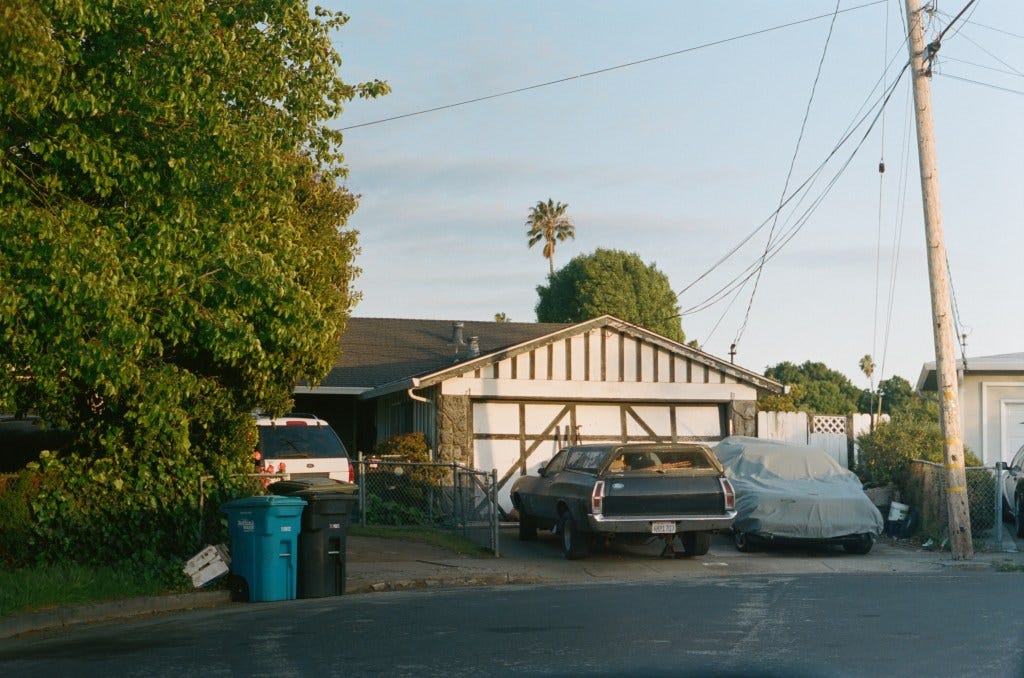
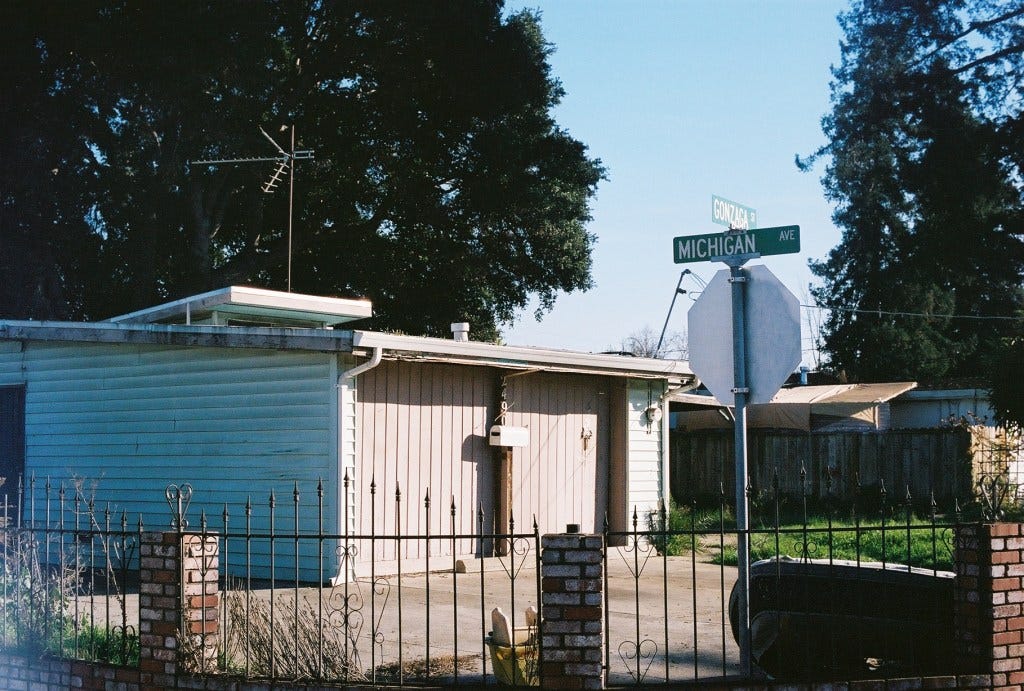
The great summary of where I find myself in the present is framed by a few moments where I’ve had the opportunity to step into the glare of the ‘white cube’ lights over the past few years. The first was a weird offer from the assistant of Łukasz Stanek, a professor of Architecture, who wanted the support of someone to help him document my hometown, East Palo Alto. It was wildly hilarious that this random white man, looking to profit from a local’s perspective, wanted my ‘assistance.’ He, by definitions of the white supremacy that paint those white cube walls was already the ‘expert.’ What exactly was the benefit to me?
“If you would be interested, we are offering a (paid) opportunity to have your work displayed in Munich, and potential publication within architectural articles in tandem with digital curation.”
I had to assume that the pay might mean I wouldn’t be credited. To put my name on any work I did would be admission by this asshole he had no clue what he was talking about. He couldn’t fathom the human reality behind a patch of marshland that evolved from Ohlone stewardship to being an oft forgotten, prone to flooding paved over swamp of tract homes for those on the fringes of segregation in the Bay Area for the better part of 80 years.
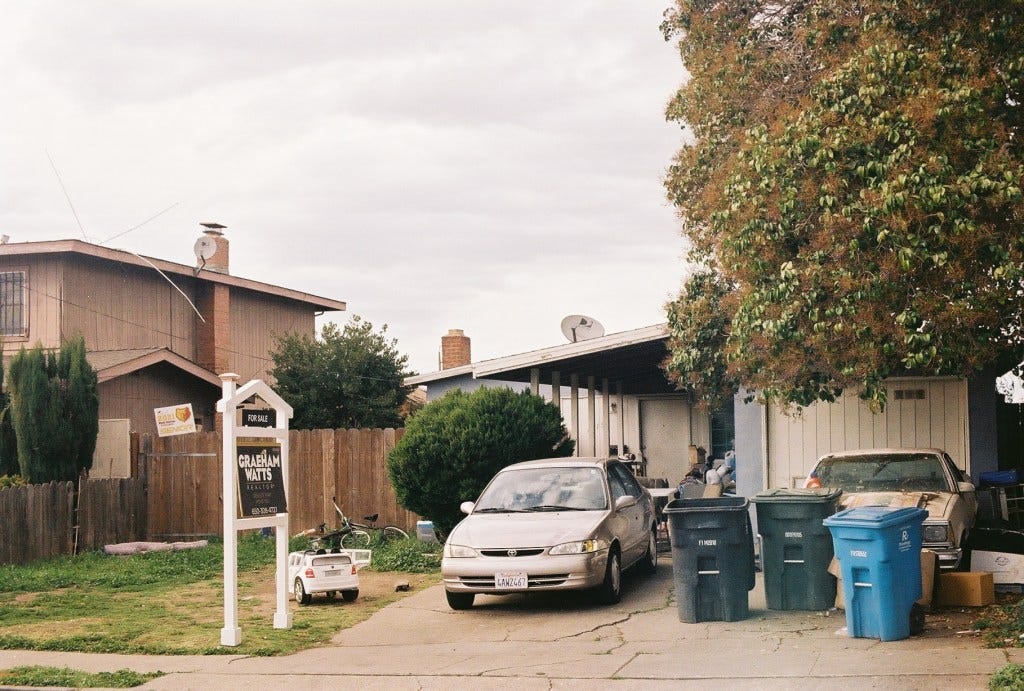
Typical for me, I ran the absurdity by someone close to me, one who had long become my favorite person to shit talk white supremacist artistic shenanigans with before I responded to Stanek’s assistant at the University of Michigan. I was luckily out of town during the already planned shoot dates, so I provided some contacts to some other local to East Palo Alto film photographers a generation younger than me that I’m sure smelled the BS express and let the ‘opportunity’ slide as well.
Who in the fuck in Munich fucking Germany is gonna care about East Palo Alto, California? After all, architecturally it doesn’t deviate from the majority of suburban architecture in California built before 1960. The vast majority of the housing stock dates to before the Camelot years in the states. I’m sure some white architecture professor was never gonna get to the core of the humanity that made those 2.5 square miles of underresourced to the point of neglect tract homes unique.
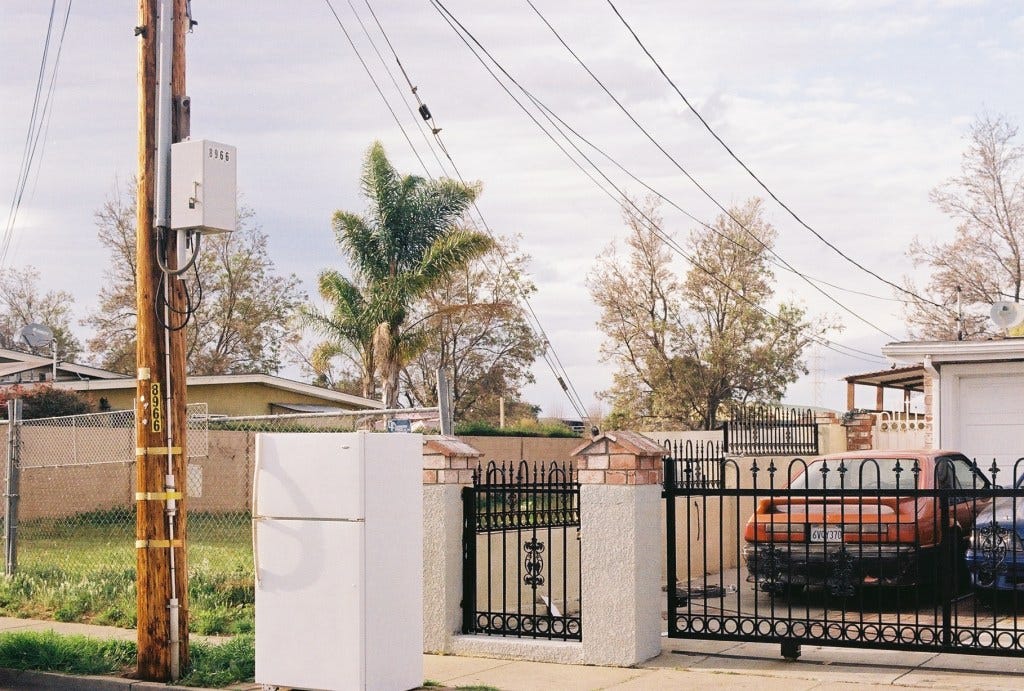
This was quickly followed by an ask by Ori Gallery in Portland, Oregon. I can say my relationship with that gallery was complex. On one side, as my existence in Portland quickly cooled to a state of perpetual life bound purgatory, my hours volunteering at the gallery gave some disruption, some social contact with the world that was around me. It also helped me develop my ribald distaste for the city as a whole, and to a degree the way identity politics especially around race, gender and sexuality are heavily weaponized against any form of accountability.
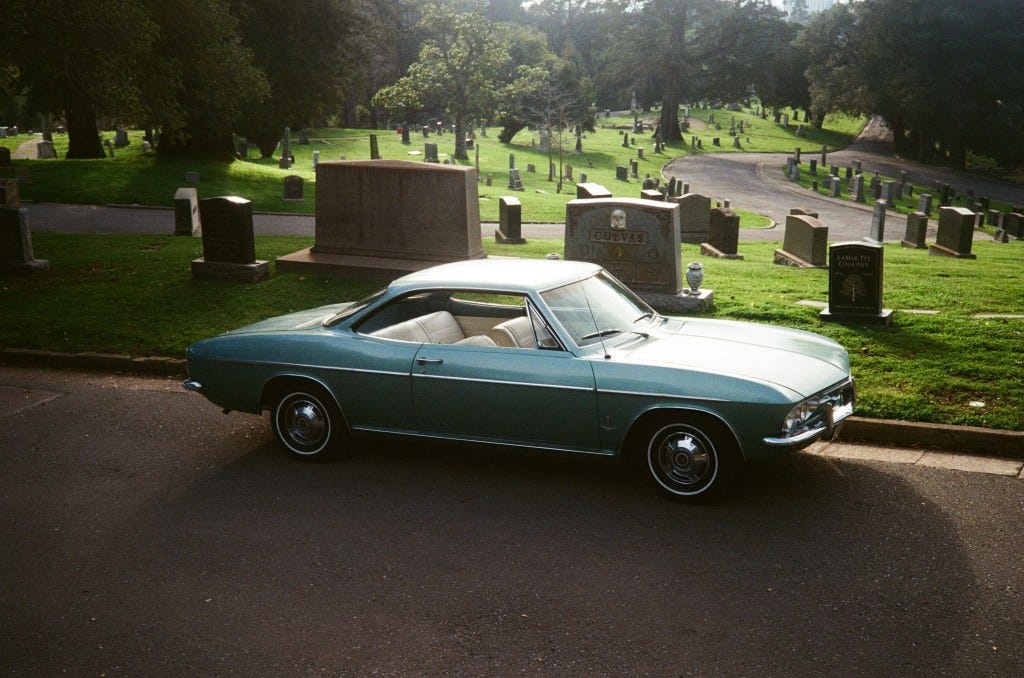
It was perplexing when I was asked to do an exhibit there given I had been gone for 5 years. I was keen to intuit they had probably spoiled the very limited pot of marginalized artists local to the metropolitan area. That unease doubled down given I really hate Portland. What deep source of toxicity would I mine myself for the attention? I tried to soften my stance, given, as I hinted in my last bit of writing, I’m not exempt from participating in the desires and the false promise of belong. There’s creativity that can be rendered to an audience from your emotional state to make a buck. I still wanted another Corvair. $2,000 as a trade for coming up with a themed exhibit would get me closer to that very tangible goal quicker.
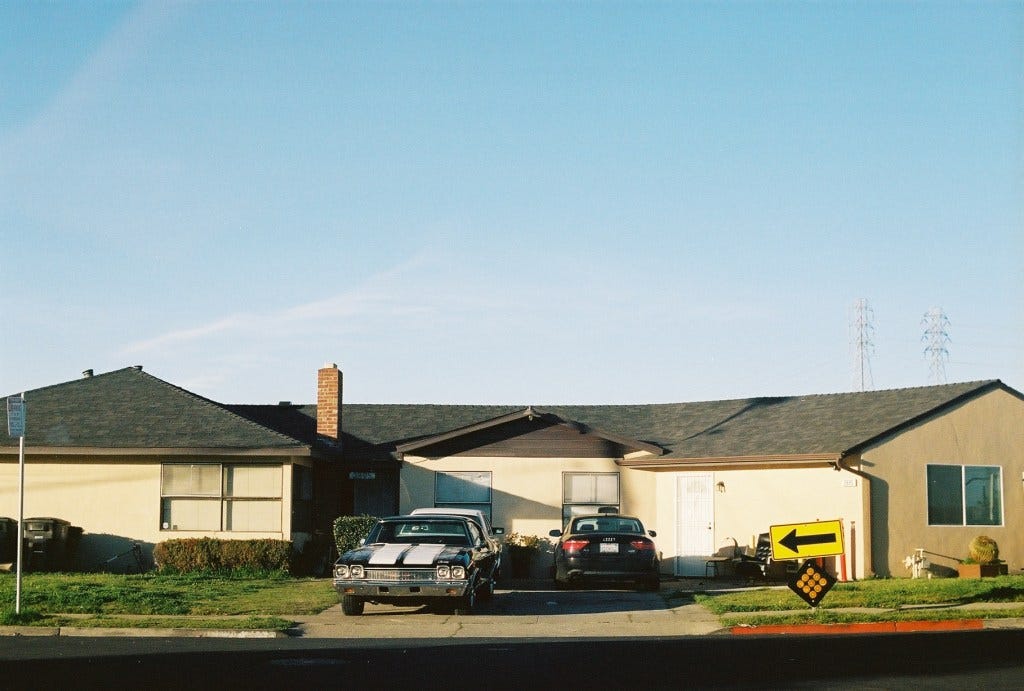
I took it way too seriously. There’s still a color coded in red, yellow and green planning document to soothe my own need for project management still shared with the gallery directors in my Google Drive. There’s also an artistic statement that never made the light of day that it might be a relief, a tell, a full on recognition that I’m probably always wearing my heart on my sleeve each time I fire a shutter. In an act of witnessing, I’ll share what was at the heart of why I was willing to put my soul on the line just for a smidge of a budget for another Corvair:
The photos displayed on the wall show some of what remains of The East Palo Alto I lived in while doing elder care for my father during these pandemic years of 2020 through 2023. I’ll be frank, there’s little left in a city of 30,000 that was 55% Black around the time of my birth that is now 9% Black.
Coming back, however I got reminded of some baseline facts about myself and where I come from. There were different views on self determination that formed the city being officially incorporated a year after my birth, after it had spent nearly 20 years as a weird set of unincorporated tract houses initially meant for working class whites that became a taste of mid 20th century “American Dream” for Black and Brown folks as the Eisenhower Administration gave way to the Kennedy Administration.
It was also just outside of the mile dry zone dictated by Stanford University, in another county downstream from a forever flooding creek. Halfway between the way to San Jose from San Francisco, it was a pit stop, and a notorious red light district as well. Little did I know when I was a kid, watching my grandmother and aunts getting their hair set by Trans hairdressers the proximity to my own developing queerness I was.Mirror, Mirror Beauty Salon stood in front of a dying Gay Bar/Bath House in the AIDS crisis 1980’s. Manhattan Avenue was a miniature Castro Street where gay Stanford Students found safe(r) housing through Damron Guides. The Bath House Bachelor’s Quarters actually gave solace to closeted rich white men in mansions and Eichler’s mid-century marvels well into the 1970’s.
It’s all now paved over for a multi-story DLA Piper/Four Seasons Hotel complex. Maybe a bunch of rich white closted men just order the same sex off of the apps like room service to their rooms instead of actually having to deal with the nitty gritty of their desires. This is to say there’s little left where I come from that reflects my identity, or what makes me safe. I’m in my 40’s myself, a lot of the elders that looked after me as a kid would be well over a century old now. I’ve grabbed some memories that predate my adult interest in photography, as those photos appear in albums.
There’s a bit more that I said about the context of Black communities in the Bay Area that I’ve also documented, notably Oakland, as I approach my 18th year of off and on living in that city. There’s even more about the Black communities I’ve documented elsewhere along Great Migration patterns. The exhibit was happening after long overdue visits to friend-family in both Baltimore and Philadelphia. Those cities give me a sense of home I don’t find where I come from these days. They actually were the biggest source of humanity in the photos I earmarked for display.
When the exhibit went live on the website, none of this was included. Instead, the typical identity politics narrative of Black Queers against white Portland were plastered over mine. To top it off it, the website page included only a portrait of another Oakland photographer I took. That photographer spends the bulk of her artistic practice doing the same type of rage baiting. It was comically appropriate she was chosen to visually represent my work over anything I would have preferred. It was tragically poetic. Billy had warned me to protect myself around making the exhibit so tangibly personal. I sadly instilled him with a false confidence that I ‘knew’ who was curating my exhibit without giving him the full context.
I found myself doing my best to not acknowledge I was silently bleeding. Sure I couldn’t physically put a bandaid over the wound, yet I had been cut to my core. My pride sent me into snarky retaliation by posting that what was being said about my work wasn’t accurate, but still show up June 7th, 2024 for the opening. I was immediately chastised for stating my sovereignty over my own work. I was reprimanded for noting that the oft-touted concept of consent had been ripped away from me. I was told that this was just what art galleries did. I was to believe them even if their mission statement til this day says:
Together they seek to reclaim and redefine “the white cube” through amplifying the voices of Trans and Queer Artists of color, community organizing and mobilization through the arts.
I guess reclamation means doing exactly the same thing that white supremacist curation of creativity does, just in Blackface with a veneer of Queer. I honestly haven’t pursued anything artistically institutional since. Photography isn’t the only venue I’ve done this; I’m clearly writing for catharsis and not profit now. All through 2025 I’ve backed out of DJ gigs.
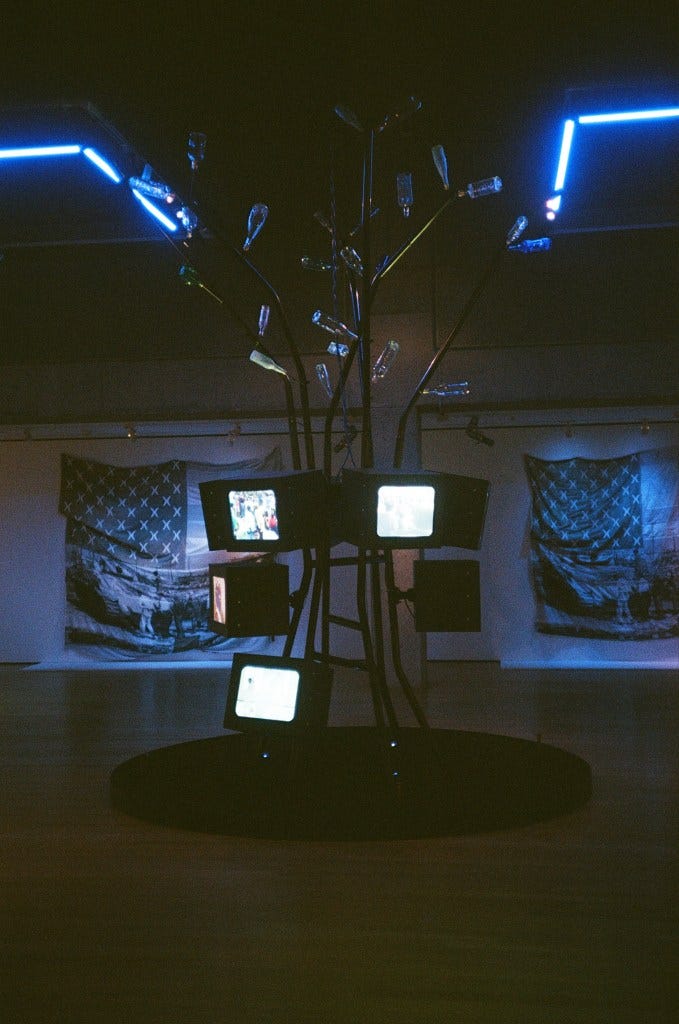
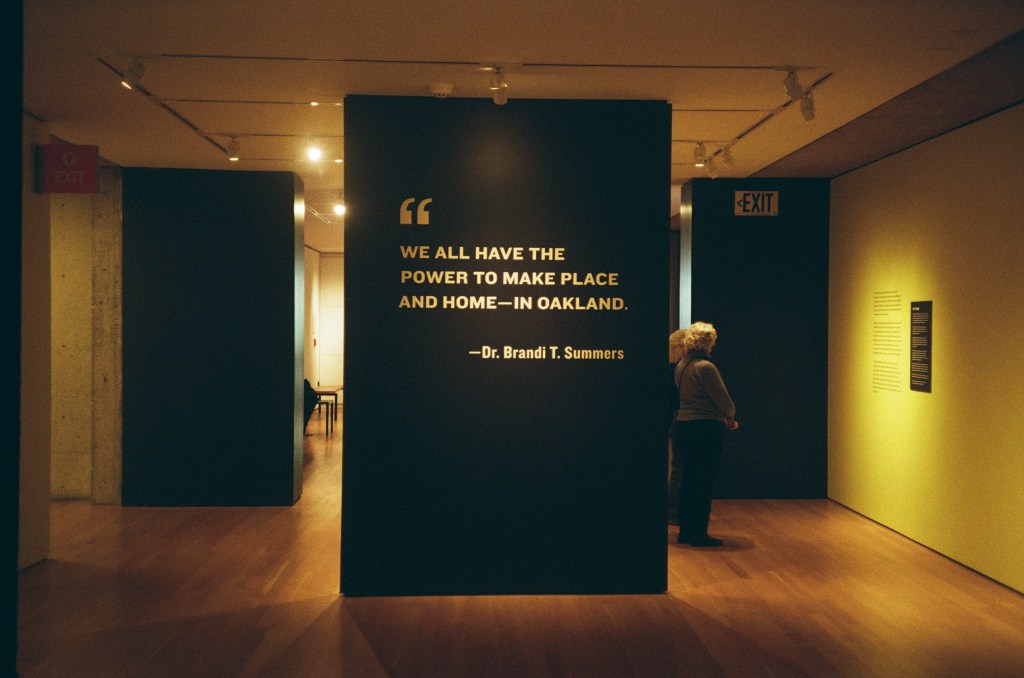
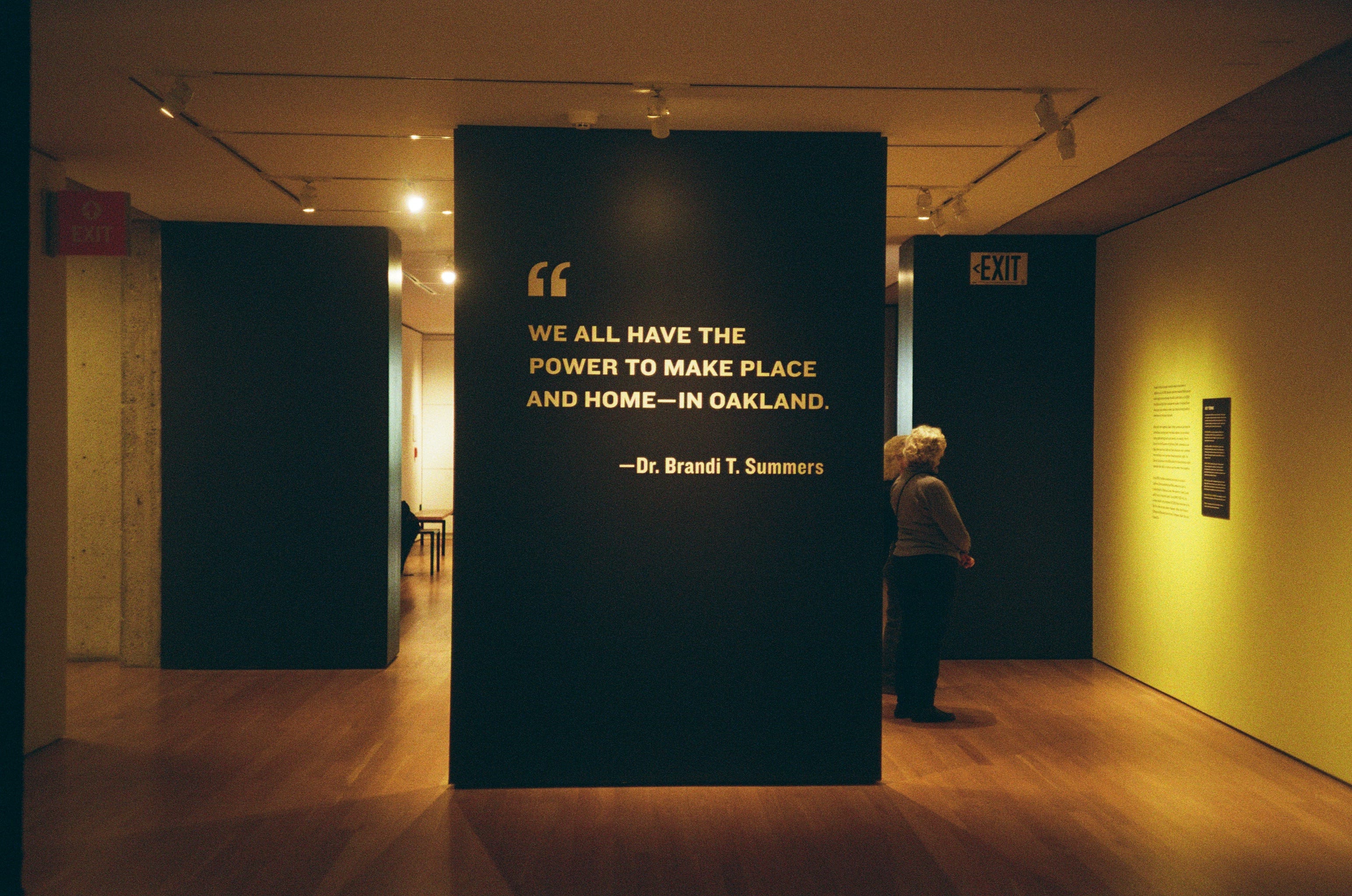
All of my distancing from the various artistic identities is for the better honestly. There’s perhaps a bit of a sadist streak in me that had to remind myself why. The gentler parts of me that realized that I didn’t need to go to Oakland Museum of California’s Black Spaces: Reclaim & Remain exhibit. As the Black population dwindles throughout the Bay Area, what does the literal standoffish Brutalist complex have to offer the ghosts of Blackness that once swelled to nearly 50% in the city that holds Lake Merritt as its heart?
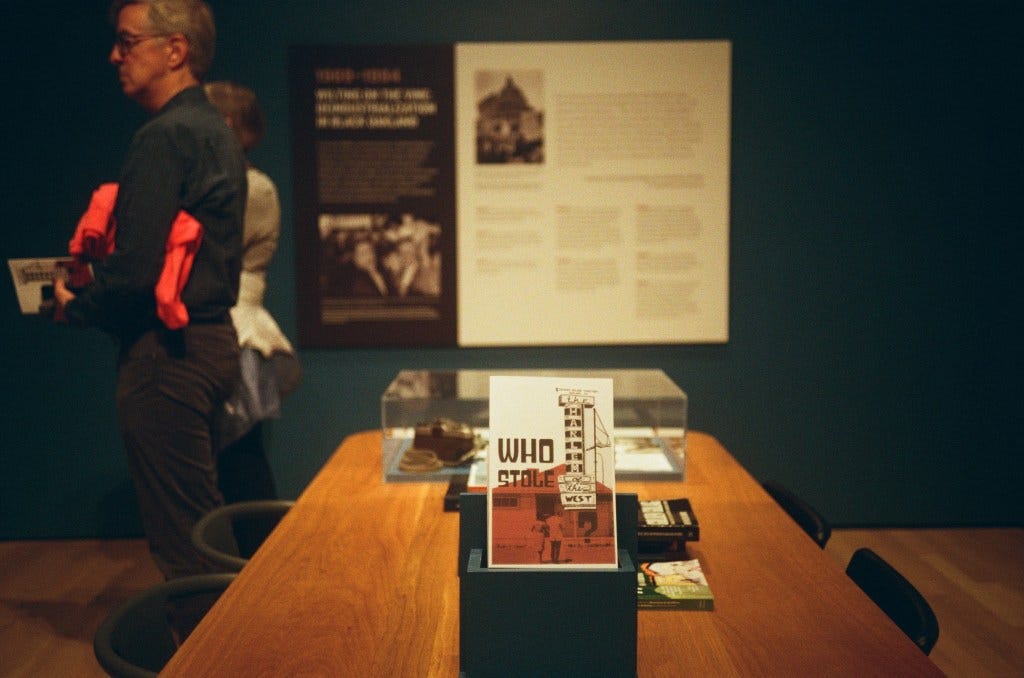
Maybe it was because it was because it was 6 weeks to close on the exhibit that I entered a mostly empty exhibit. It still was a Sunday early afternoon, around 2pm, on Martin Luther King Jr. Holiday weekend tho. I expected more traffic. The majority of the foot traffic seemed biased to the latest trend in exploiting marginalization for profit; Good Fire: Tending Native Lands was making that $25 per admission ticket really profit for the museum despite being on the exhibition calendar longer.
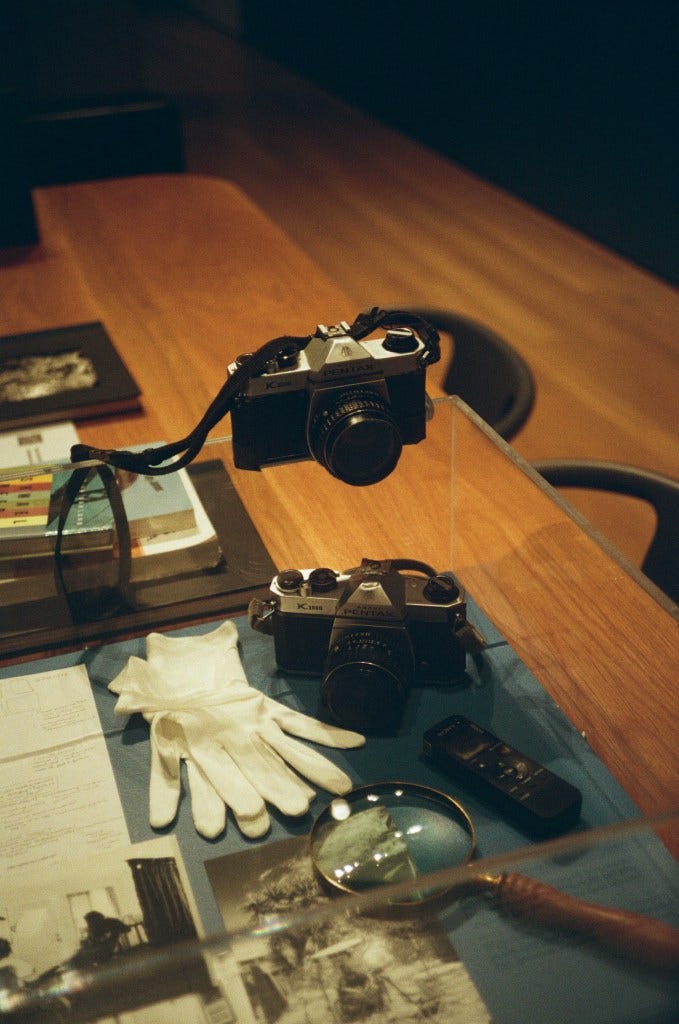
If you have a smidge of interest in what it means to be of the Black American diaspora in the Bay Area, the exhibit offered little that is new information. The exhibit reeked of old Jet magazines growing moldy in a barbershop. This tried and true could honestly be a permanent exhibition somewhere else in the underutilized expanse of the museum. It honestly pales in comparison to what’s accessible in either the Black Panther Museum directly on Broadway or the African American Museum and Library on 14th Street. Tellingly, admission to both of those museums is free99.
As I walked through, denoting the relics that offered nothing in terms of new perspective, I ended up trailing a white couple about 10 years older than me. They stopped at the migration patterns map, audibly expressing curiosity surrounding why the domination of California orientated migration was post World War II, typically from Texas, Louisiana, Arkansas and Oklahoma.
I barked, to the point of startling them: “Cars.”
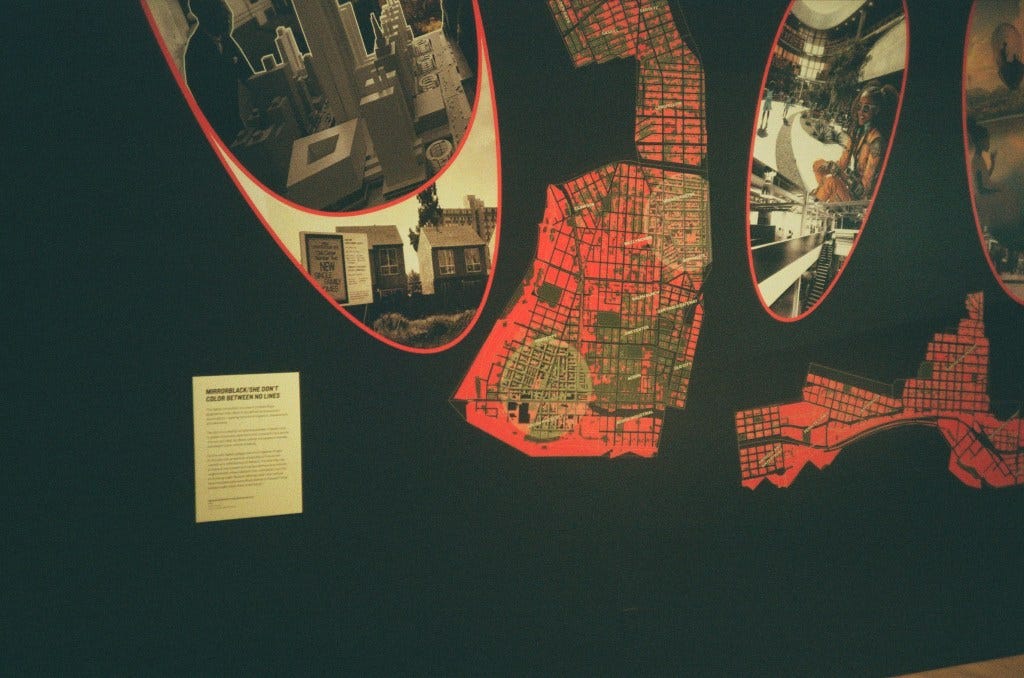
I challenged them to think about how many rail lines were passenger service oriented on the East Coast and into the Midwest from places like Alabama and Georgia by the early 20th Century. The Great Migration East of the Mississippi was facilitated by easier access to ‘public’ transit (even if segregated). The vast wilderness of the west only had a few dominant rail lines that originated fairly far out of the South.
Nat King Cole’s 1946 hit version of “Get Your Kicks on Route 66” was art imitating life. It was a Top 5 ‘Race Record’ peaking at #3. Black folks hummed along to it playing on their radios as they drove west. The appeal was strong enough for it to cross over to the white ‘Pop’ charts, where it peaked at #11. Let us not discuss the hundreds of cover versions that obscure the original legacy of the song.
It lead to a 10 or so minute conversation about how many details that were left out of the sterile exhibit. We acknowledged actually quite an number of dark underbellies that I was surprised to be dialoging about. We honestly talked about rape and the burdens of labor being so foundational to the concepts of colorism. I recognized that there’s too much of what I know that comes dripping out of my mouth unfiltered should anyone give me the time of day.
It was Cicely’s only hope that I’d pull off the Ori exhibit. She lit up in rhapsody at the fantasy that I’d let the chopper fly, and she’d have a front row seat to watch her baby at their best. I shouldn’t be surprised I get locked out of so many spaces because my love is living in the full truth of the past and present. I always discover my optimism there. I want a better future for all of us.
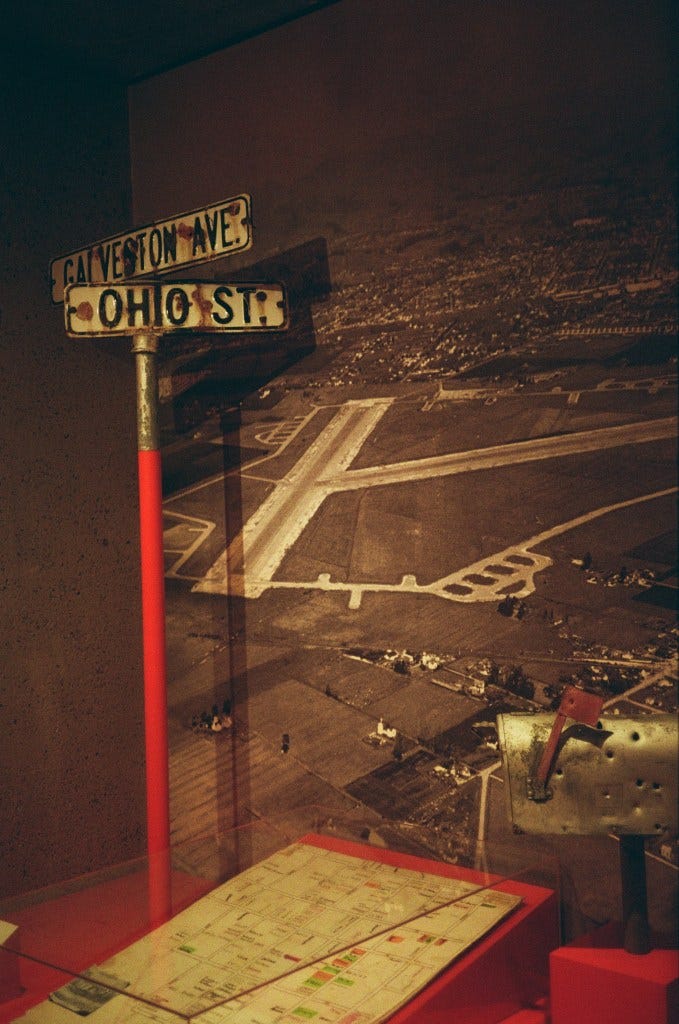
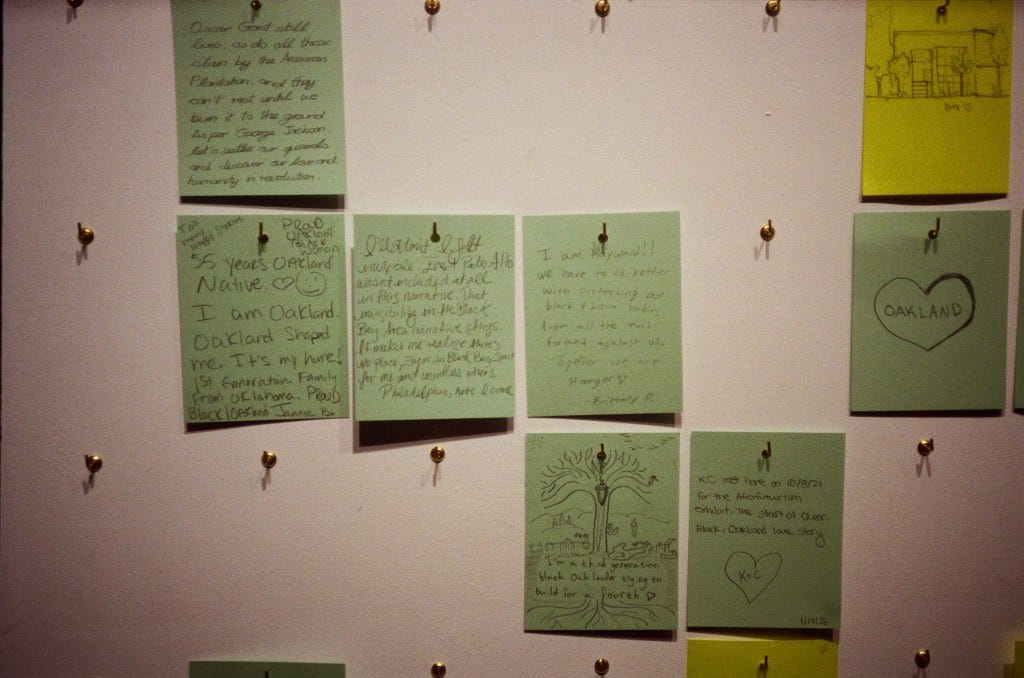
It shouldn’t have surprised me as I meandered through the exhibit that I found nothing of where I was raised. There was no East Palo Alto. I was slightly cheered that the ghost of Russell City rose in the exhibit from the grave underneath office parks that lie on the east side of the San Mateo Bridge today. There was no Nairobi School or Shopping Center. There was no Whisky Gulch. There wasn’t even a hint of the 55% I acknowledged with my own words nearly 2 years ago. It was erased again. I realize that I’ve become a ghost where most would admonish me into saying was home.
I console myself as I wind this down with gentle words I’ve heard recently. I remember that N’ganga Daizy told me I’ll be home wherever I go. There’s a beautiful narrative I don’t know exactly how to cap the story that is Teddy taking me to The Time Is Always Now exhibit at The Philadelphia Museum of Art that played out as a live tarot card spread in such a magical way. That afternoon after the peak of a Gemini Full Moon has changed the trajectory of my life. Sometimes the institution makes room for all the right things to happen. Sometimes you just keep getting to live life instead of trying to purify it into the sterility of whiteness.
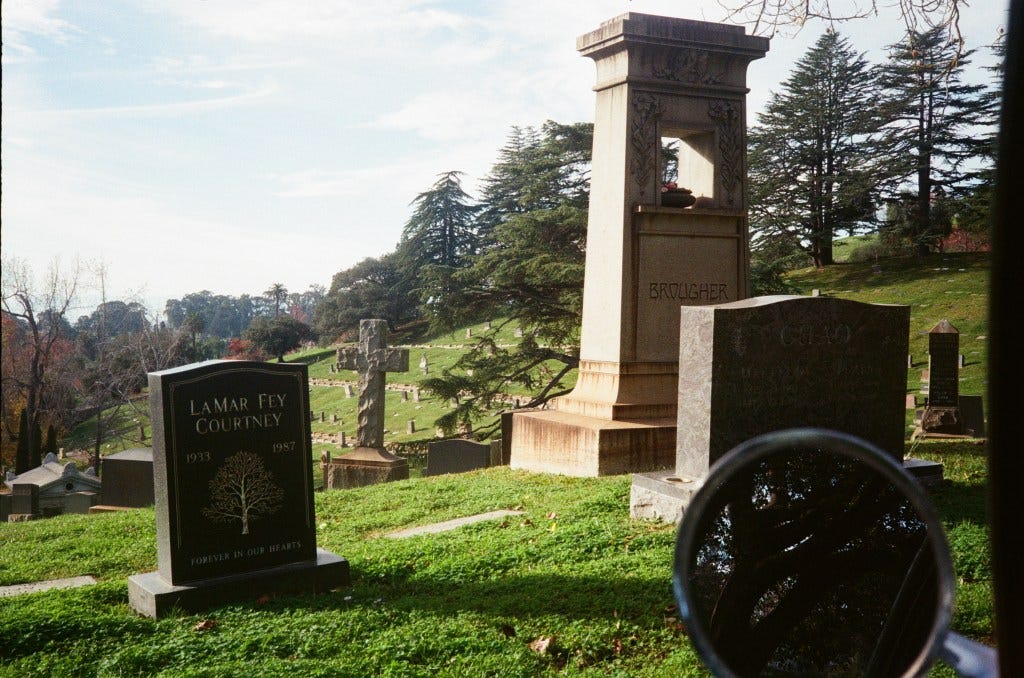
Of all things, as much as I’ve been heartbroken by what happens when I create, Josh reminded me that I never give up on what and who I am despite my pain. I am my pain and somehow I turn that into something genuine. I’ll admit that I was shocked hearing that as I again, wonder how much am I burying as I start to put the toes on the gas pedal to get out of the cemetery that is the Bay Area.
It’s so telling that I drove Gracie to Mountain View Cemetery to breathe after the exhibit. The last frames of me picturing some pictures are contrasted that I’m living life in a vibrant piece of the past these days. Here’s to hoping that I still can translate a heap of grief into something beautiful, something beyond the brutalism of the ‘white cube.’
Happy Black History Month.
Find the nuances beyond those tired ass old narratives.
